CodeForce Tech Notes
Are Social Media Ads Checked For Scams? What Customers Should Know
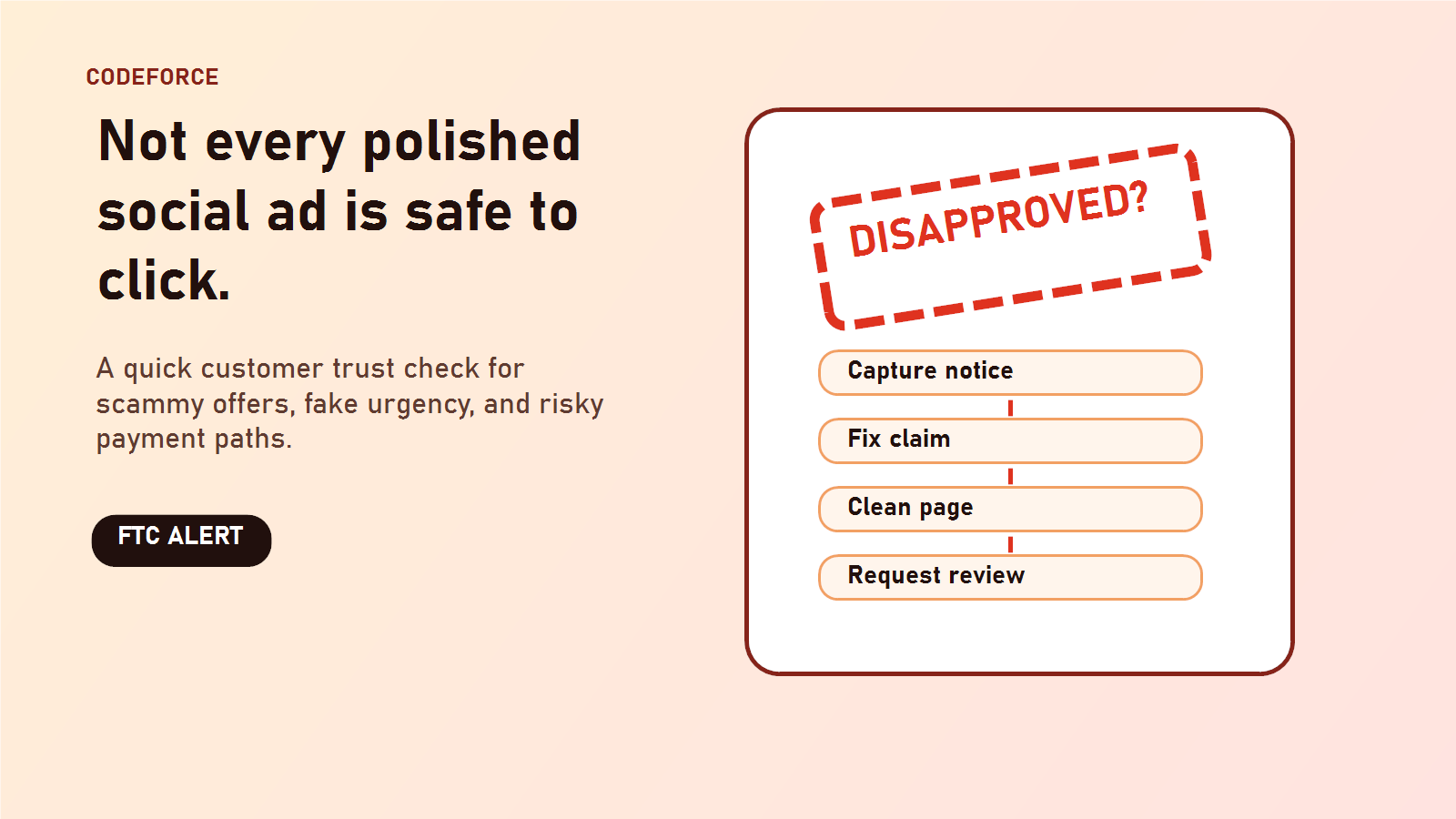
A polished social media ad is not proof that an offer is safe. Use this quick trust check before clicking, buying, or entering payment details.
Social media ads can look polished and still be scams. A clean design, comments, a countdown timer, or a familiar-looking logo does not mean the offer has been checked by the platform. Small businesses and customers both need a quick way to slow down before clicking, buying, or entering payment details.
The FTC recently reminded consumers that scam ads can appear on social media. That matters for local businesses because your customers see these offers beside real posts from friends, community groups, and trusted brands. The more normal a scam looks, the easier it is for someone to treat it like a regular shopping or service link.
Why scam ads work
Scam ads usually borrow trust. They may copy a familiar brand style, promise a large discount, use fake urgency, or send people to a landing page that looks professional enough at first glance. The problem is not that people are careless. The problem is that scam pages are designed to create a fast emotional decision before the buyer checks the details.
A safer click checklist
- Check the destination. Look closely at the domain before entering payment information.
- Search the business name separately. Do not rely only on the link inside the ad.
- Look for real contact information. A legitimate business should make support, policies, and identity easy to find.
- Be careful with urgency. A countdown timer or “last chance†message is not proof of a real deal.
- Use a payment method with protection. Be cautious if a seller pushes wire transfer, gift cards, crypto, or payment apps.
What businesses should check on their own pages
Good businesses also get hurt by scammy-looking patterns. If your landing page has no phone number, no address or service area, weak return language, broken links, or a checkout that feels rushed, customers may hesitate even when the offer is legitimate.
Before running an ad, review the page like a skeptical customer. The offer should match the ad, the business name should be clear, the policy language should be easy to find, and the next step should feel safe.
How CodeForce can help
CodeForce helps small businesses clean up landing pages, contact paths, website trust signals, and social sharing previews. If an ad is sending people to a page, that page should make the business easier to trust, not harder.
Source: FTC: Are ads on social media vetted or checked for scams?

