CodeForce Tech Notes
Cybersecurity Awareness Month 2026: A 30-Minute Small-Business Checkup
Use this practical 30-minute Cybersecurity Awareness Month checklist to improve passwords, MFA, scam reporting, software updates, backups, and staff habits.
Cybersecurity Awareness Month 2026 has a blunt theme: “Don’t Make It Easy for Them.†For a small business, that does not require a giant security department or a week of meetings. It means closing the ordinary gaps criminals count on: reused passwords, missing multifactor authentication, unreported scam messages, delayed updates, forgotten administrator accounts, and backups nobody has tested.
The National Cybersecurity Alliance’s October campaign centers on four habits: use strong passwords and a password manager, turn on multifactor authentication, recognize and report scams, and update software. This checklist turns those habits into a practical 30-minute review for the websites, email accounts, payment systems, cloud tools, and staff workflows that keep a business running.
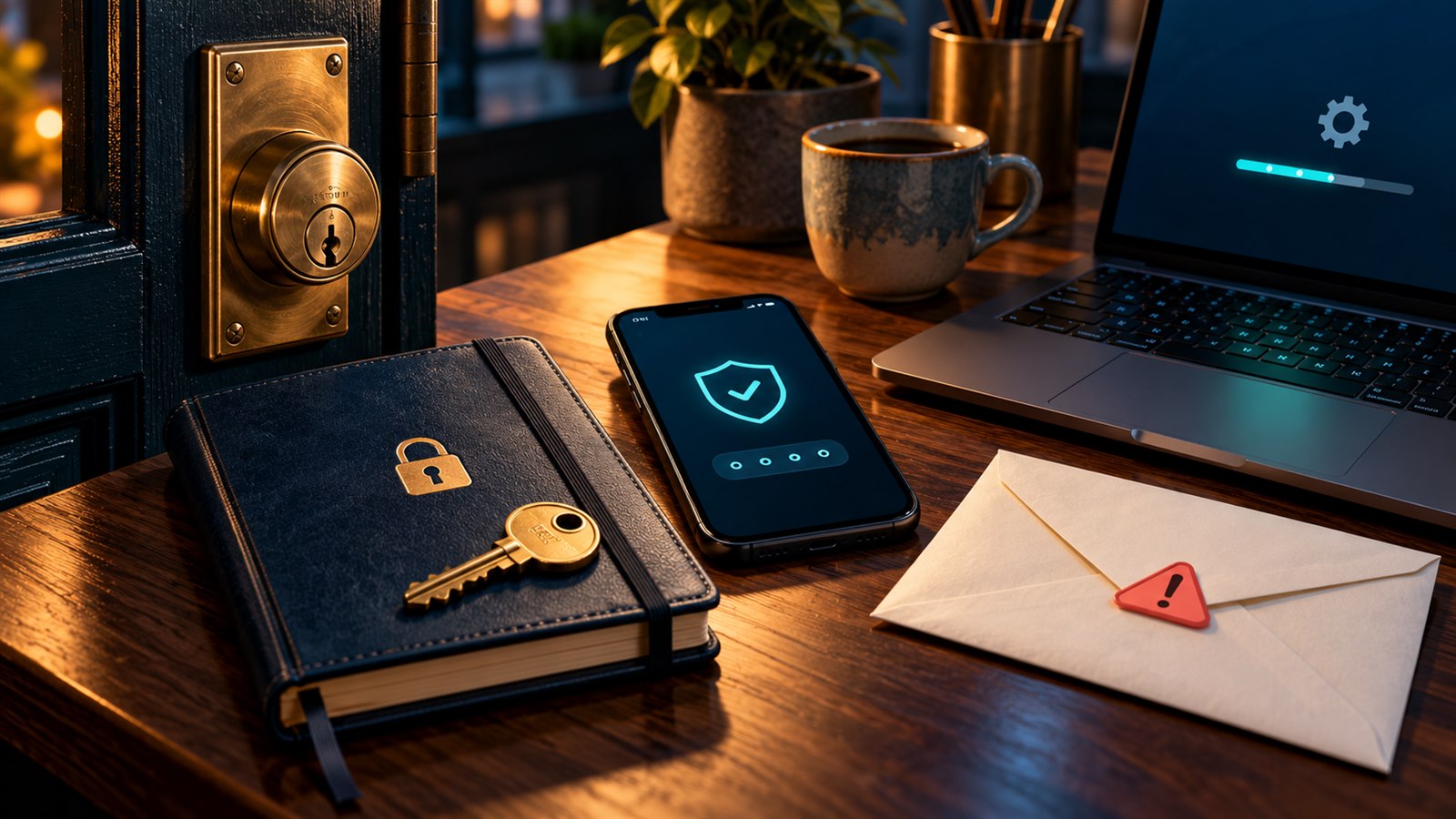
Why Cybersecurity Awareness Month matters to small businesses
Most owners do not wake up hoping to spend the morning reviewing account permissions. They are serving customers, sending estimates, processing orders, managing staff, and trying to make the next sale. That is exactly why small gaps can remain open for months.
A criminal does not need to “hack the whole company†if a reused password opens an inbox, a fake invoice convinces an employee to change bank details, or an outdated plugin provides an easier way into the website. The goal of this checkup is not fear. It is to make the easiest attacks less easy and to create a clear next step when something looks wrong.
The 30-minute small-business cybersecurity checklist
Minutes 1–5: Secure the accounts that can reset everything else
Start with the email accounts used by the owner, bookkeeper, website administrator, and anyone who can access customer data or payments. Email is often the key to password resets across the rest of the business.
- Confirm each critical account has a unique password stored in a reputable password manager.
- Turn on multifactor authentication, preferably with an authenticator app, security key, or passkey when the service supports it.
- Check recovery email addresses and phone numbers. Remove old employees, former vendors, and numbers the business no longer controls.
- Review recent login activity for unfamiliar devices, locations, or forwarding rules.
A strong password is not just long; it must be unique. One excellent password reused across six services still creates six opportunities for trouble if any one of those services is breached.
Minutes 6–10: Review who has administrator access
Open the user lists for the website, ecommerce platform, Google Business Profile, social accounts, accounting software, domain registrar, hosting account, and shared cloud drive. Look for users who no longer need access and for people holding a higher role than their work requires.
Use individual accounts rather than one shared owner login. Individual access makes it possible to remove one person without changing everybody’s password, and it leaves a clearer activity trail if a setting changes unexpectedly.
Pay special attention to the domain registrar and hosting account. If someone controls the domain, DNS, or primary hosting login, they may be able to redirect the website or email even when the WordPress password is secure.
Minutes 11–15: Install updates with a backup plan
Updates often include security fixes, but clicking every update button blindly is not a maintenance strategy. First verify that a current backup exists, that it includes the files and database, and that someone knows how to restore it. Then review operating systems, browsers, phones, routers, WordPress core, themes, plugins, ecommerce extensions, and business applications.
Enable automatic updates for devices and reputable software where the risk is manageable. For a revenue-producing website, use a staging site or a documented backup-and-test process for changes that could affect checkout, forms, shipping, or payments.
Minutes 16–20: Make scam reporting easy
Employees are more likely to report a suspicious message when they know exactly where to send it and will not be blamed for asking. Create one simple rule: unusual requests involving money, passwords, gift cards, bank details, or urgent secrecy require verification through a second channel.
- Call a known phone number instead of replying to the number in the message.
- Open the vendor or bank website independently instead of using the message link.
- Pause changes to payment instructions until a known contact confirms them.
- Report the message to the designated person before deleting it.
The Federal Trade Commission recommends training staff to recognize business email imposters and checking invoices carefully. A believable display name is not proof that an email came from the person it claims to represent.
Minutes 21–25: Check backups and recovery contacts
A backup is useful only if it is recent, protected, and restorable. Confirm when the last successful backup ran and whether a copy is stored separately from the system it protects. If ransomware, a broken update, or an account takeover affects both the live system and its connected backup, recovery becomes much harder.
Write down who can contact the web host, domain registrar, payment processor, IT provider, bank, and cyber insurance carrier. Store those details somewhere available even if the main inbox or cloud drive is inaccessible.
Minutes 26–30: Assign the next three fixes
Do not end with a vague plan to “improve security.†Choose the three highest-value corrections, give each one an owner, and set a date. A useful list might be:
- Enable MFA for the bookkeeping and domain accounts by Friday.
- Remove three former contractors from WordPress and Google Business Profile today.
- Test a website restore in staging before the next plugin update window.
Small, completed controls are worth more than a long policy nobody follows.
Four habits worth keeping after October
1. Use a password manager
A password manager helps employees create and use unique passwords without memorizing every one. The business should decide which approved tool to use, who manages shared vaults, how emergency access works, and what happens when an employee leaves.
Do not store critical passwords in an unprotected spreadsheet, a shared note, or a stack of browser profiles nobody owns. The process should be simple enough that staff will actually use it.
2. Turn on multifactor authentication
MFA adds another check after the password. It can stop many account takeovers that begin with a stolen or guessed credential. Prioritize email, banking, payroll, accounting, payment processing, social media, website administration, hosting, domain registration, and cloud storage.
MFA is not permission to approve every unexpected prompt. Repeated prompts can be an attack. If a login request appears when nobody is signing in, deny it, change the password from a trusted device, and review the account.
3. Recognize and report scams
Scams change their wording, but pressure patterns remain familiar: urgency, secrecy, fear, authority, and an unusual request for money or credentials. A reporting culture gives the business a chance to warn others and secure the account before one suspicious message becomes a larger incident.
4. Keep software updated
Unsupported software and ignored patches leave known weaknesses available longer. Keep an inventory of essential software and devices, remove tools the business no longer uses, and assign responsibility for reviewing update failures. “Automatic†is helpful, but someone still needs to notice when automatic updates stop.
Do not forget the website and online store
A business website may connect forms, customer records, analytics, advertising pixels, payment gateways, shipping systems, email marketing, and staff accounts. Security work should reflect those connections.
- Use a maintained theme and actively supported plugins.
- Delete inactive plugins and themes rather than leaving unused code installed.
- Limit administrator roles and use separate accounts for routine content work.
- Protect forms against spam and test where submissions are delivered.
- Keep payment processing with a reputable provider and avoid storing card data unnecessarily.
- Monitor uptime, failed logins, file changes, and checkout behavior.
If the site is already behaving strangely, do not keep installing random “cleanup†plugins. Preserve evidence, take a current backup, and use a deliberate website recovery process. CodeForce also provides website and WooCommerce support and business technology help when the problem crosses several systems.
A simple monthly security routine
Cybersecurity Awareness Month is a useful reminder, but the most valuable result is a repeatable routine. Once a month, review critical administrator accounts, update status, backup success, recovery contacts, and any suspicious messages reported by staff. Once a quarter, confirm vendors and former employees no longer have access they do not need.
Keep the checklist short enough to finish. If every review creates a 40-page report, it will quietly disappear from the calendar. A one-page record of what was checked, what failed, who owns the fix, and when it is due is usually more useful.
Cybersecurity Awareness Month FAQ
What is the 2026 Cybersecurity Awareness Month theme?
The National Cybersecurity Alliance’s 2026 theme is “Don’t Make It Easy for Them.†The campaign emphasizes strong passwords and password managers, multifactor authentication, scam recognition and reporting, and software updates.
Is multifactor authentication enough by itself?
No. MFA is an important layer, but a business still needs unique passwords, controlled access, secure recovery methods, updates, backups, and a process for suspicious requests. Security works in layers.
How often should a small business review user access?
Review critical accounts monthly and whenever an employee, contractor, or vendor changes roles or leaves. High-risk systems such as email, banking, payroll, hosting, and the domain registrar deserve priority.
Where should a small business start if everything feels overdue?
Start with the primary email, domain, banking, payment, and website administrator accounts. Turn on MFA, remove obsolete users, confirm recovery details, and verify backups. Then schedule the remaining systems instead of trying to repair everything in one sitting.
Sources
- National Cybersecurity Alliance: Cybersecurity Awareness Month 2026
- National Cybersecurity Alliance: 2026 virtual kickoff
- CISA: Secure Our World cybersecurity resources
- Federal Trade Commission: Protect your small business
Need help turning a messy list of accounts, plugins, vendors, and backups into a practical plan? Book a CodeForce intro call.

