CodeForce Tech Notes
Bill-Pay Impersonators: Make Your Payment Path Easier To Trust
Bill-pay impersonator scams hide inside normal routines. Small businesses can help customers by making official payment links clear and easy to verify.
Bill-pay impersonator scams work because they interrupt a routine people already trust. A customer searches for a utility, tax, loan, or service payment page. A fake site or misleading result appears. The person thinks they are paying a real bill, but the money or personal information goes somewhere else.
The FTC has warned about bill-pay impersonators and other fake payment paths. This is especially relevant for small businesses because customers expect payment links, invoices, portals, and checkout pages to feel clear and official. Confusion creates risk.
What customers should check
- Use saved official links. Go through the company website or app instead of a random search result.
- Check the web address. Misspellings, odd endings, and extra words can be warning signs.
- Watch the payment method. Be suspicious if a bill collector demands gift cards, wire transfers, crypto, or payment apps.
- Call using a verified number. Do not call only the number shown on a suspicious payment page.
What businesses should fix
Businesses can reduce customer confusion by making official payment paths easy to recognize. The website should clearly link to invoices, checkout, payment portals, policies, and support. Emails should use consistent branding and explain what the customer is paying for.
If customers have to search around for the right payment page, scammers get more room to interfere. A clear payment path is not just convenience. It is fraud prevention.
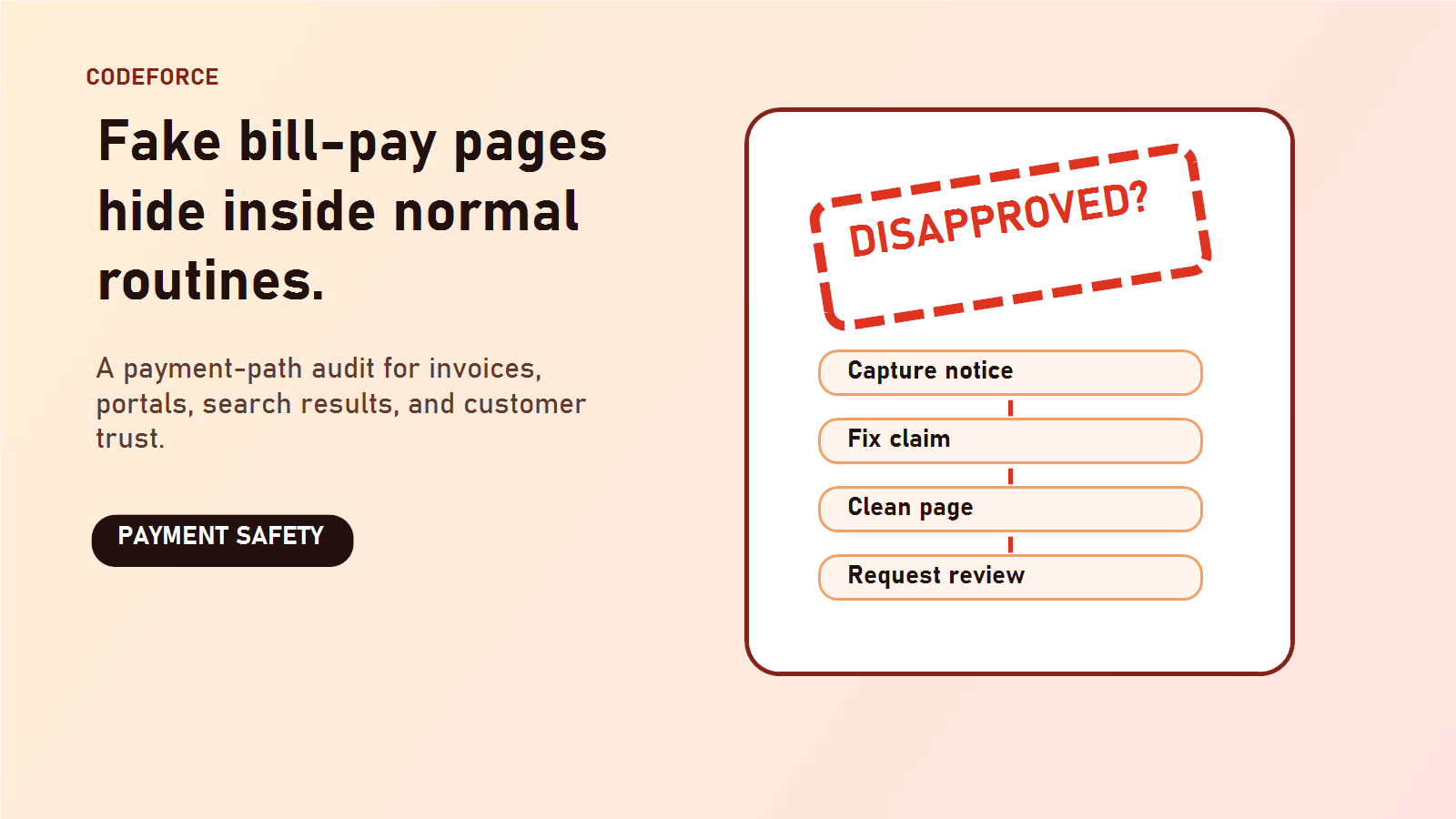
A quick payment-path audit
- Search your business name plus “pay bill†or “invoice.â€
- Confirm your official payment page is easy to identify.
- Check that invoice emails link to the same official domain.
- Make sure support contact information is visible before payment.
- Remove old payment links, dead pages, and confusing redirects.

